
The Best Ice Bath Routine: Beginner to Advanced
Mar 16, 2026
The most effective ice bath routine is 2-4 sessions per week, 2-5 minutes each at 50-59°F (10-15°C), totalling roughly 11 minutes of cold exposure per week. Morning sessions boost energy and focus for the day, while afternoon sessions support better sleep. Consistency matters far more than intensity - short, regular sessions outperform occasional long ones every time.
Below, we outline a complete weekly routine from beginner through advanced, including when to plunge, how to breathe, and how to progress safely over time.
Aim for 11 minutes of cold exposure per week across 2-4 sessions. Beginners start with 2x per week, 1-2 minutes at 55-59°F. After 2 weeks, increase to 3-4 sessions and extend to 2-4 minutes. Progress by lowering temperature, not by adding time. Morning sessions boost energy; afternoon sessions improve sleep. Breathing technique is the single most important skill.
Your first two weeks: building the foundation
The first two weeks are about adaptation, not performance. Your body needs time to build the physiological responses that make ice baths effective. During this period, brown fat forms around your neck and upper back, the smooth muscle controlling blood flow strengthens, and your cardiovascular system learns to handle cold stress more efficiently.
Start with two sessions per week at 55-59°F (13-15°C) - cold enough to feel challenging, but manageable. Aim for 1-2 minutes per session. Before stepping in, take 2-3 minutes of controlled, deep breaths. When the cold hits, focus on long, slow exhales through your mouth. This activates your parasympathetic nervous system and is where the mental resilience benefit comes from.
What is a good ice bath routine for beginners?
Enter the water slowly. All Passion Ice Baths are designed for a seated position, keeping your feet planted for safe entry. Keep your hands above the water for the first few sessions if the cold feels overwhelming. After exiting, let your body rewarm naturally for 10-15 minutes - resist the hot shower. The natural rewarming period is when your body activates thermogenesis. After two weeks, you will notice the gasp reflex diminishing and the cold feeling less shocking. That is your signal to progress.
Week 3-6: building your weekly schedule
Once adapted, increase to 3-4 sessions per week and extend to 2-4 minutes. Begin lowering the temperature by 1-2 degrees at a time, working toward 50-55°F (10-13°C). The time of day matters: morning ice baths trigger a dopamine and norepinephrine surge lasting hours, ideal for energy and focus. Late afternoon sessions (before 5 PM) improve sleep by accelerating your natural core temperature drop.
When is the best time of day for an ice bath?
Mornings for energy, late afternoons for sleep. Avoid ice baths within 2 hours of bedtime, as the initial adrenaline response can disrupt falling asleep. For athletes, timing relative to training matters too: for recovery, take an ice bath 30-60 minutes post-workout. If building muscle is the priority, wait 6-8 hours, as immediate cold blunts the inflammatory response that drives muscle adaptation. On rest days, any time works.
| Phase | Sessions/week | Duration | Temperature |
|---|---|---|---|
| Week 1-2 | 2x | 1-2 min | 55-59°F (13-15°C) |
| Week 3-6 | 3-4x | 2-4 min | 50-55°F (10-13°C) |
| Week 7+ | 4-5x | 3-5 min | 45-50°F (7-10°C) |
| Advanced | 5-6x | 2-5 min | 37-45°F (3-7°C) |
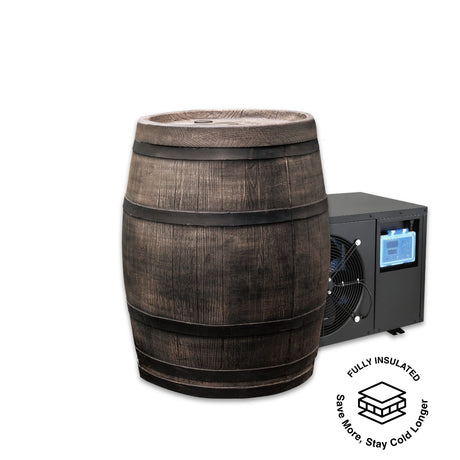
The Icebarrel
Triple-layer insulated barrel with integrated seating. 2.6 kW chiller maintains target temperature automatically. Designed with Wim Hof for consistent daily practice.
€1,995 View productThe advanced routine: intensity over duration
After 6-8 weeks of consistent practice, the goal shifts from building tolerance to optimizing the stimulus. Rather than staying in the water longer, lower the temperature. A 3-minute session at 40°F (4°C) provides a more intense physiological response than 10 minutes at 55°F (13°C), with less risk of overexposure.
Advanced practitioners often follow the "Huberman protocol" - 11 minutes of total cold exposure per week, split across 4-5 sessions of 2-3 minutes at lower temperatures. This keeps each session intense enough to trigger the dopamine and norepinephrine response without requiring long periods in the water. One sign you need to lower the temperature: if you no longer feel a gasp reflex or a strong urge to exit, the stimulus is not driving further adaptation. The session should always feel challenging.
Breathing: the most important skill in cold therapy
Breathing determines whether your ice bath feels like a panic or a practice. Before entering, take 2-3 minutes of slow, deep breaths. The Wim Hof method is popular: 30 deep breaths (inhale fully, exhale passively), followed by a breath hold after the last exhale. This primes your body by increasing oxygen saturation and calming the nervous system.
Should you do breathing exercises before an ice bath?
Once in the water, switch to slow, controlled breathing: inhale through your nose for 4 counts, exhale through your mouth for 6-8 counts. The extended exhale activates your vagus nerve, triggering the parasympathetic calming response. This is what separates someone who panics from someone who stays composed - and it is a skill that transfers directly to stressful situations outside the ice bath. After exiting, breathe normally while your body rewarms. Light movement like walking supports circulation, but avoid intense exercise for 10-15 minutes while your extremities are still cold.
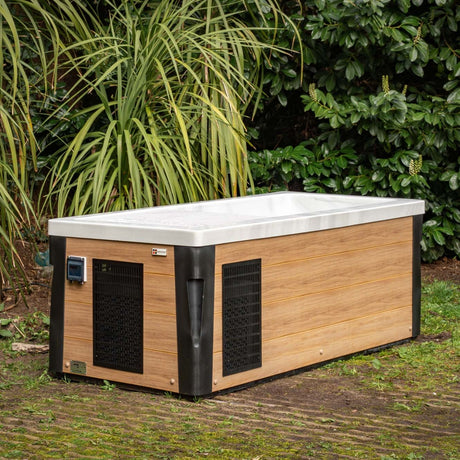
Breeze - Ice bath with current
Jet current system intensifies the cold stimulus without lowering temperature. 1.3 kW chiller, high-capacity filtration. Built for daily use.
€5,095 View productFrequently asked questions
What is a good ice bath routine for beginners?
Start with 2 sessions per week, 1-2 minutes at 55-59°F (13-15°C). Focus on breathing, not duration. After two weeks, increase to 3 sessions or extend to 3-4 minutes. Your body adapts quickly - the gasp reflex diminishes and rewarming gets faster within the first two weeks.
When is the best time of day for an ice bath?
Morning for energy and focus (dopamine surge lasts hours). Late afternoon (before 5 PM) for better sleep. Avoid within 2 hours of bedtime. For post-workout recovery, 30-60 minutes after training. For muscle growth, wait 6-8 hours post-workout.
How many times a week should you take an ice bath?
2-4 sessions per week, totalling about 11 minutes of cold exposure. Beginners start with 2x, intermediate users aim for 3-4x. Advanced practitioners may do 5-6 sessions at lower temperatures. Consistency outperforms intensity. Learn more in our cold therapy guide.
Should you do breathing exercises before an ice bath?
Yes. Take 2-3 minutes of deep, controlled breaths before entering. Once in the water, focus on slow exhales (4 counts in, 6-8 counts out) to activate the vagus nerve and stay calm. The Wim Hof breathing technique is a popular and effective method.
Ready to build your routine?
Find the ice bath that fits your practice. From the compact Icebarrel to the Breeze with jet current system.

